From the "What will they think of next?" file comes our next video of a new styling accessory for the Nissan 350Z Coupe and Roadster models (known as the Fairlady Z in Japan). Evidently inspired from Hollywood's latest super-hero serving, the creative minds over at ZLeds came up with the bright idea of designing a pair of headlamps and turning signals that are supposed to mimic the lights from Iron Man's metal suite. We will let you decide if ZLed achieved its goal after you watch the video that follows past the jump. PHOTO GALLERY
VIDEO
"Finally, the style of Italy meets the dependability of Japan," reads the seller's description of this Ferrari 360 Modena Spider replica that is built on a Toyota MR2 donor car from the year 2000, and which we found up for grabs on eBay. As is common in these type of builds, the replication of the Ferrari model is restricted to the exterior body panels with the interior left mostly intact (sans the Ferrari-badged seat covers). The Italianized Toyota has allegedly covered 109,000 miles (about 175,000 kilometers) and according to the AutoCheck history report, it was involved in an accident back in 2007, hence the salvage title. The cloned Ferrari MR2 is located in Norristown, Pennsylvania, and is listed on eBay with a 'Buy it Now' price of $20,000.PHOTO GALLERY


Watching a large truck tip over while negotiating a curve on the road and then seeing it coming towards your way without you being able to react is an experience that no driver would like to face. That said, this driver should feel extremely fortunate that the only thing damaged in the incident you are about to view in the video below is the front end of his car... VIDEO
Reinforced A-pillars and pyrotechnically charged roll hoops are obviously not on the menu for this second-generation Lexus LS 400 Cabriolet, which was created in a matter of minutes during a DIY coachbuilding lesson at the 2012 StanceWars event in Belgium this past weekend. Make the jump to view the videos for yourself. VIDEO
PHOTO GALLERY

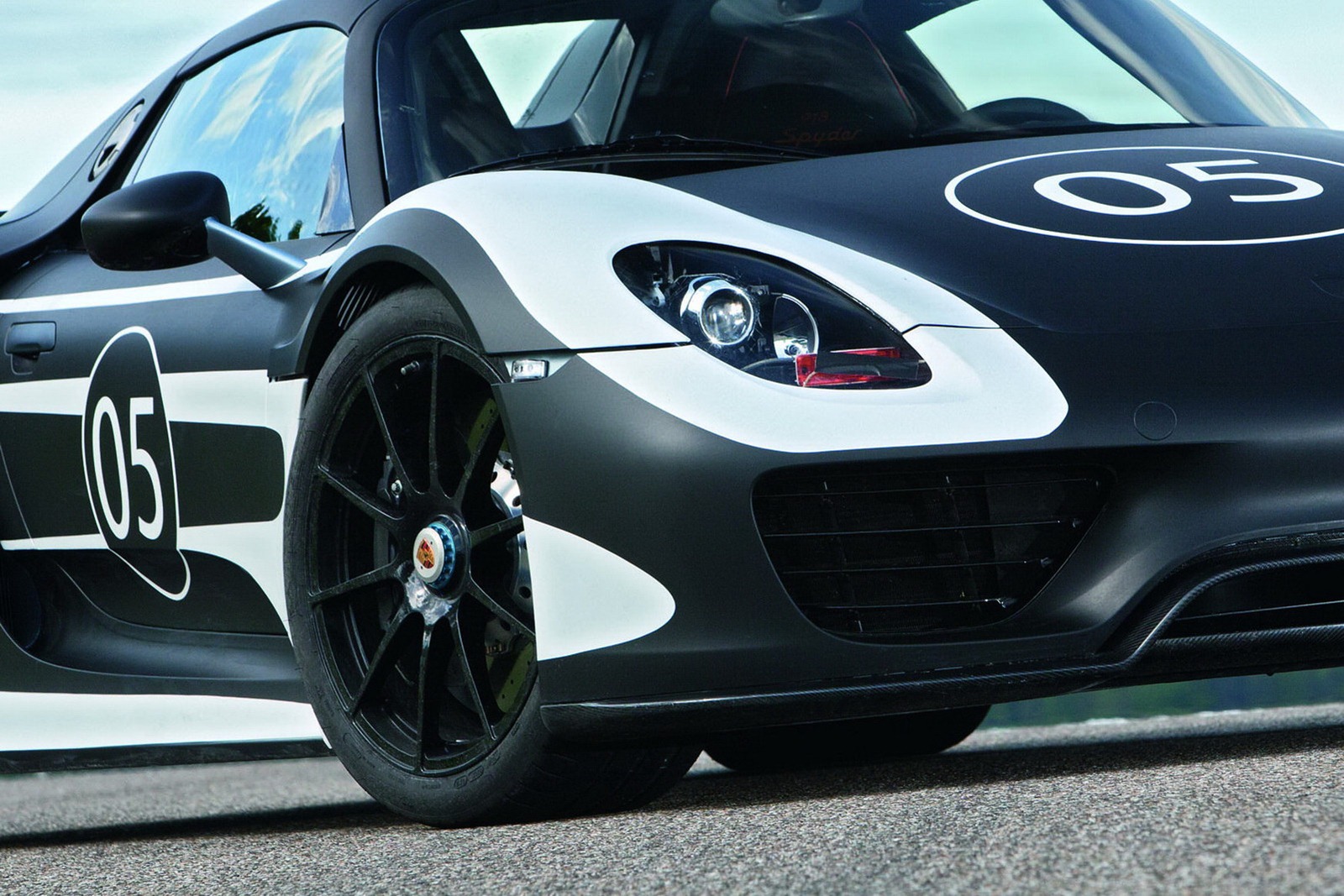
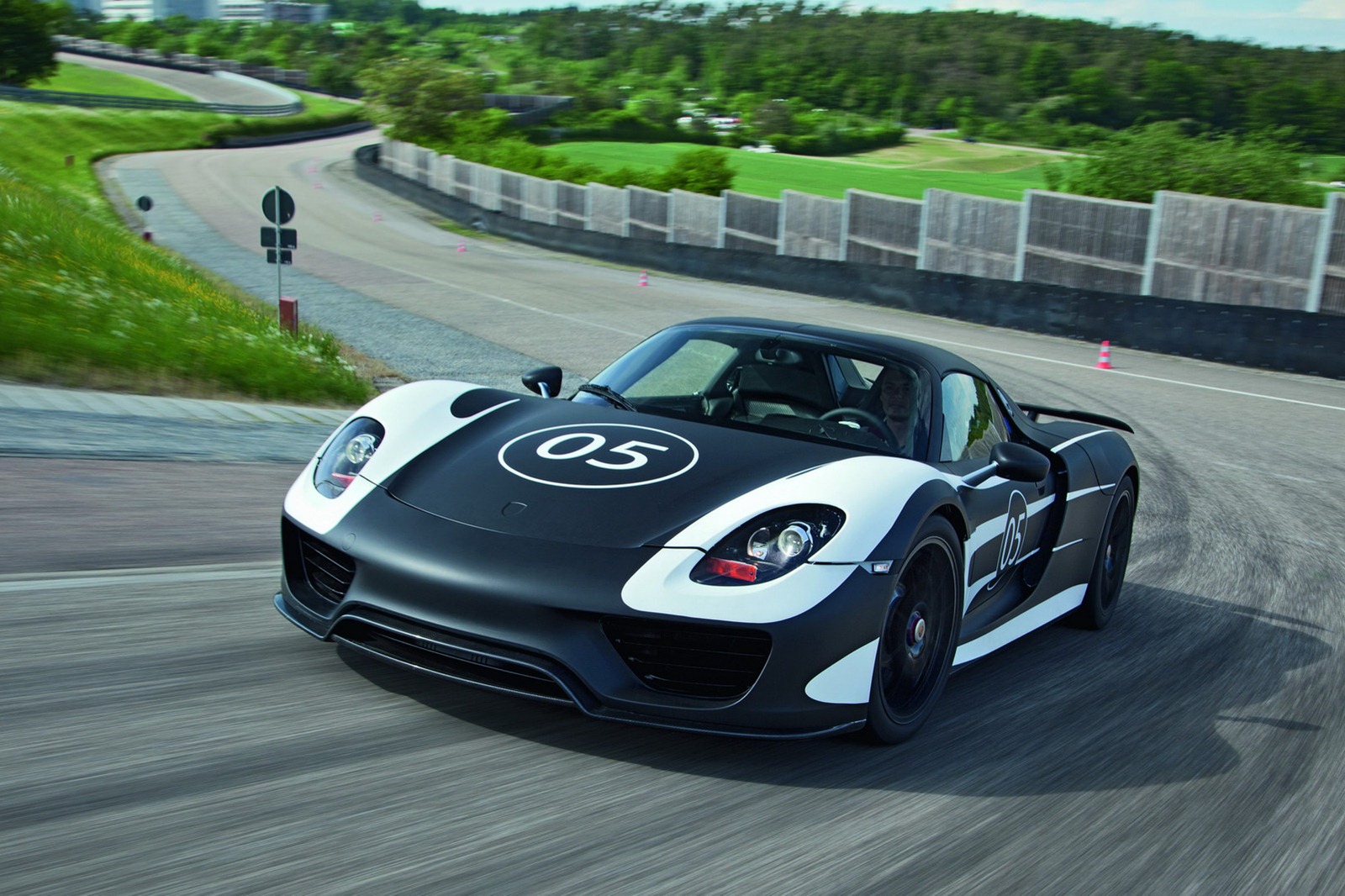
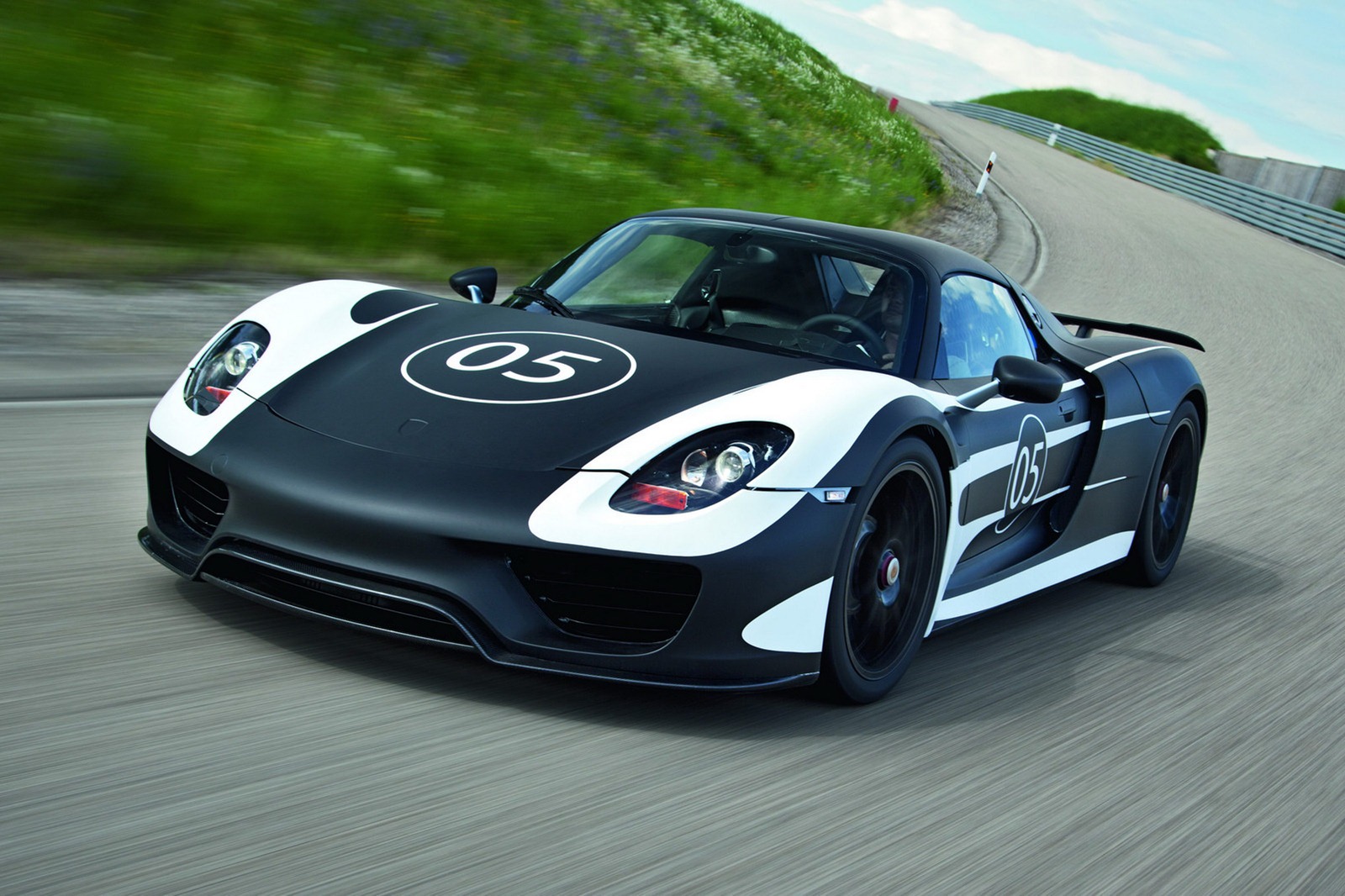
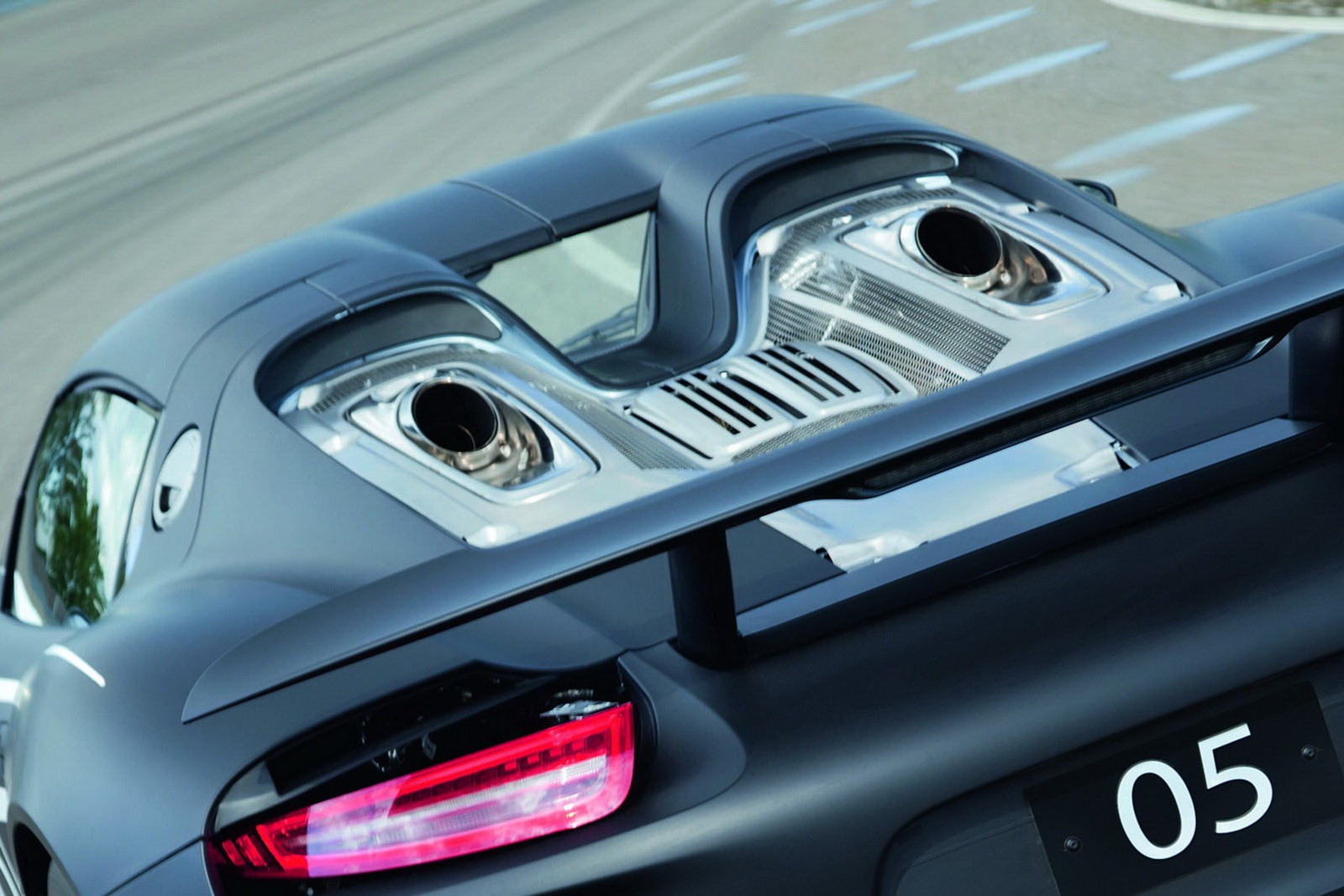
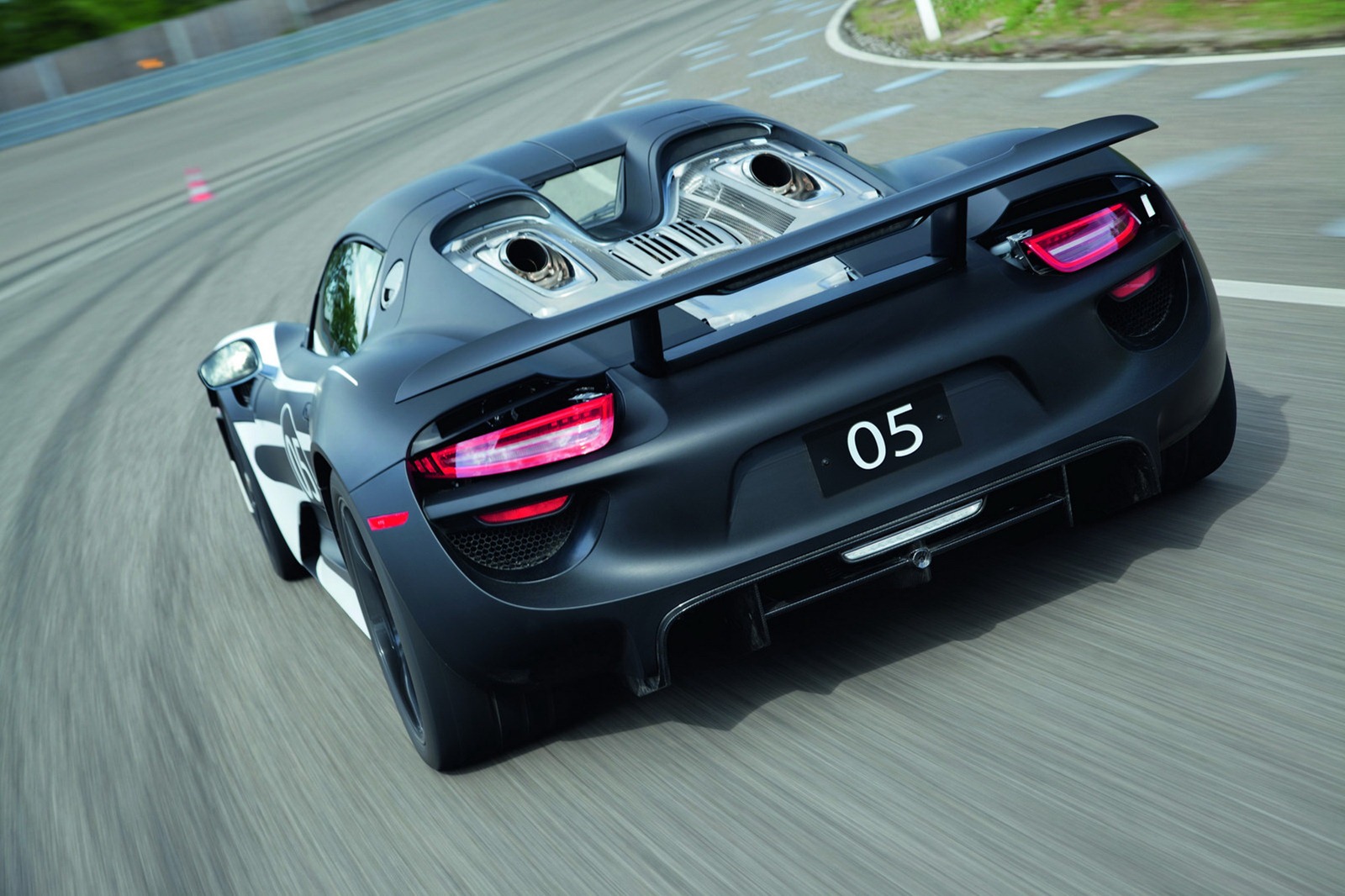
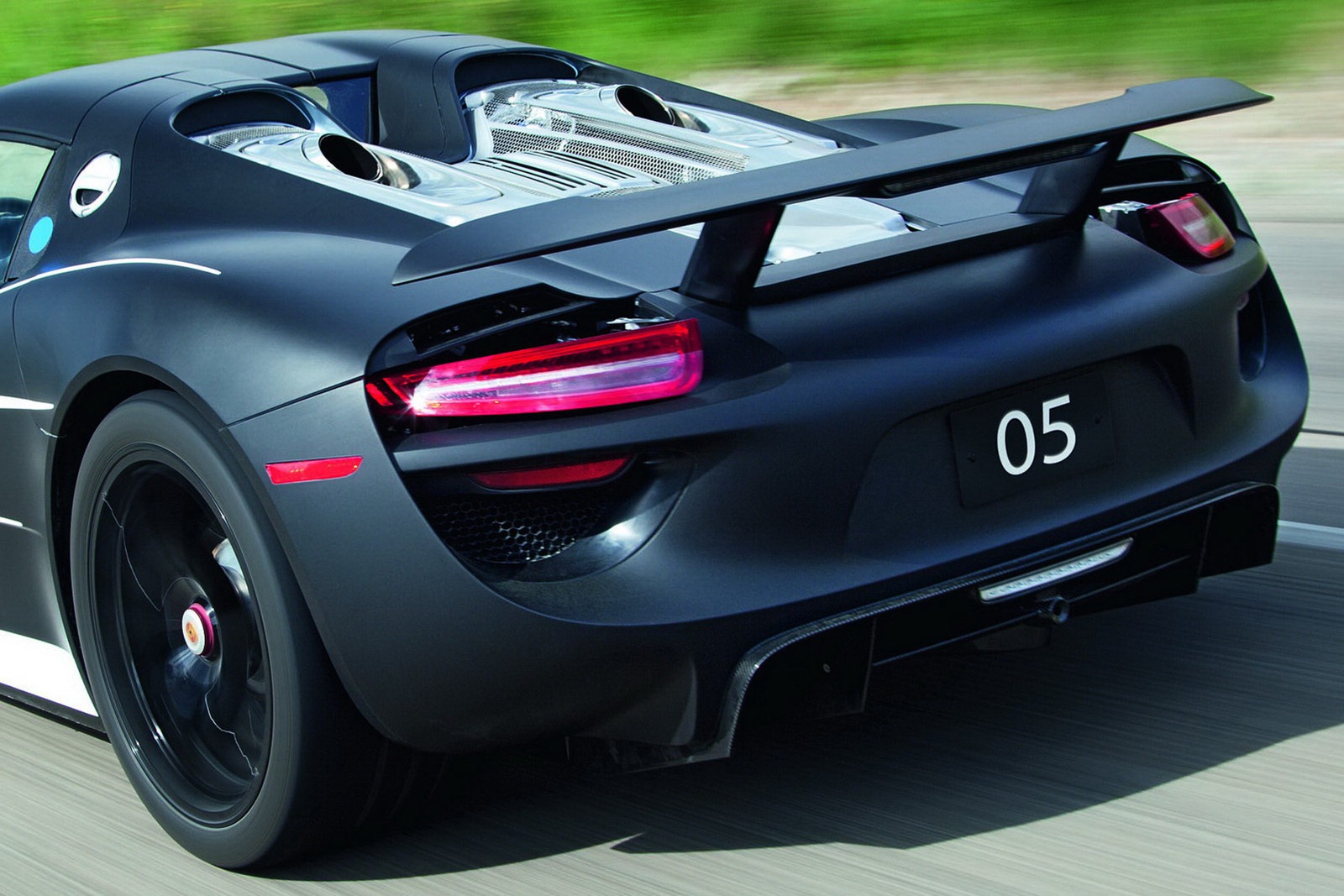
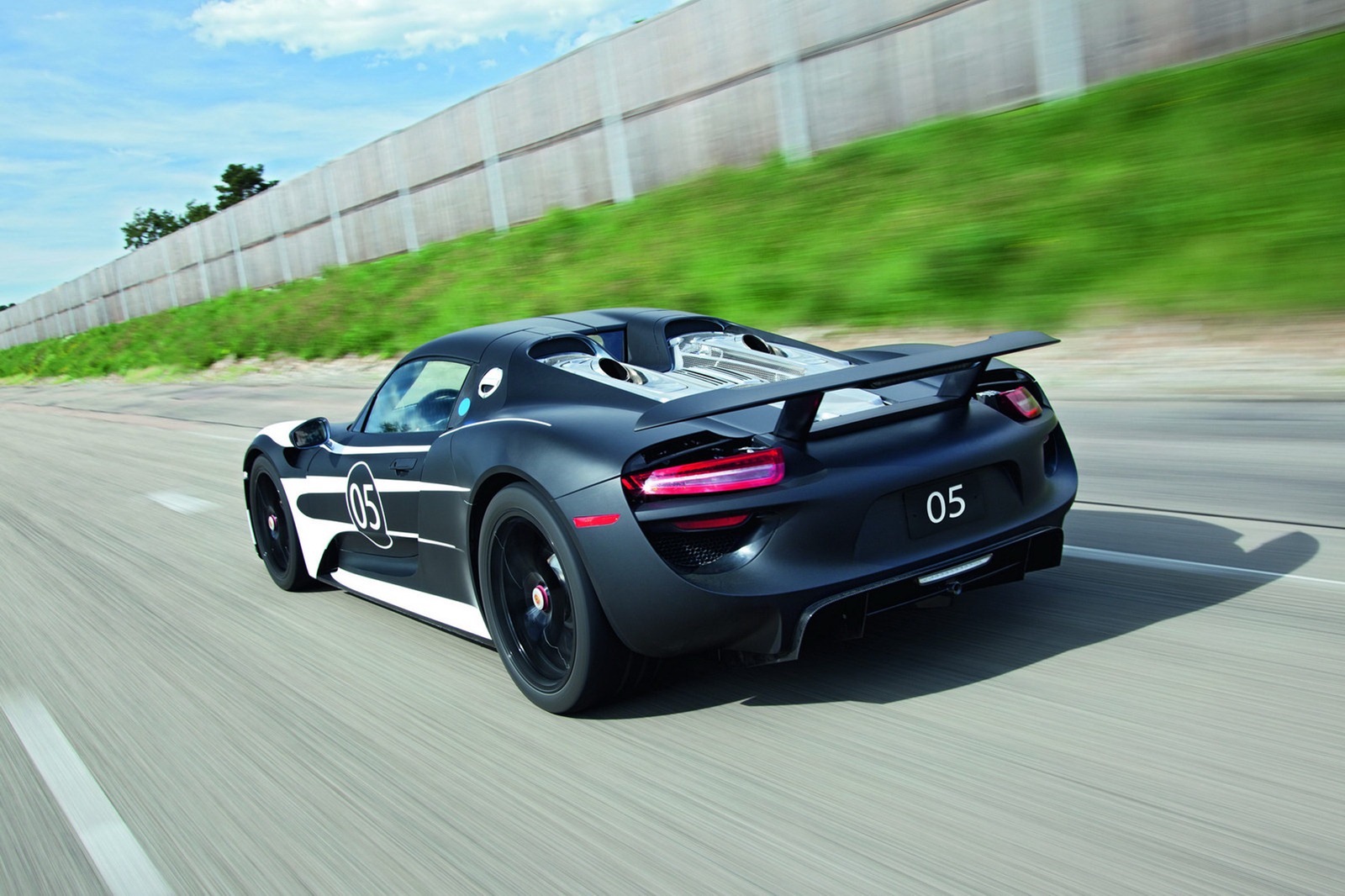
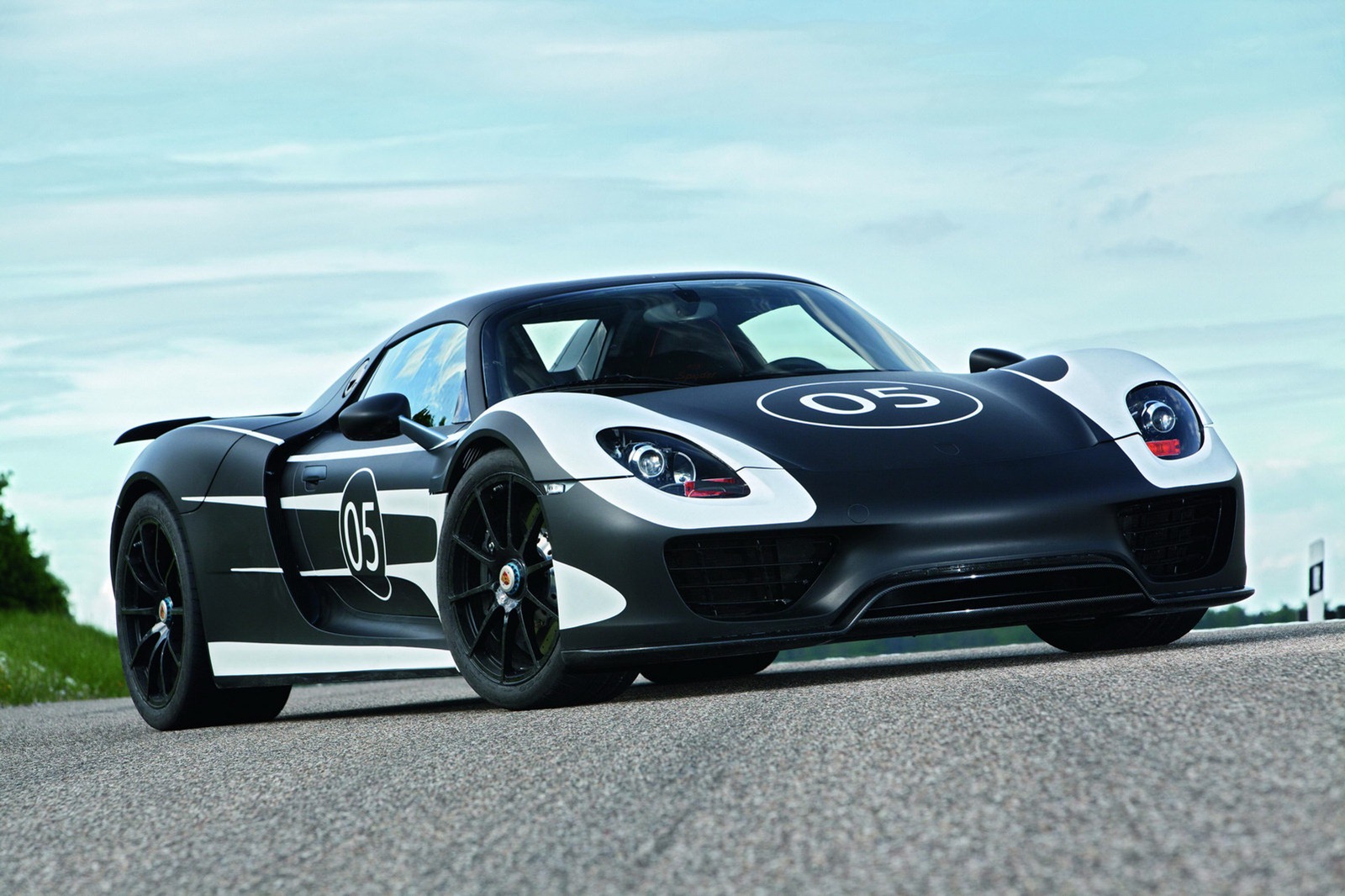
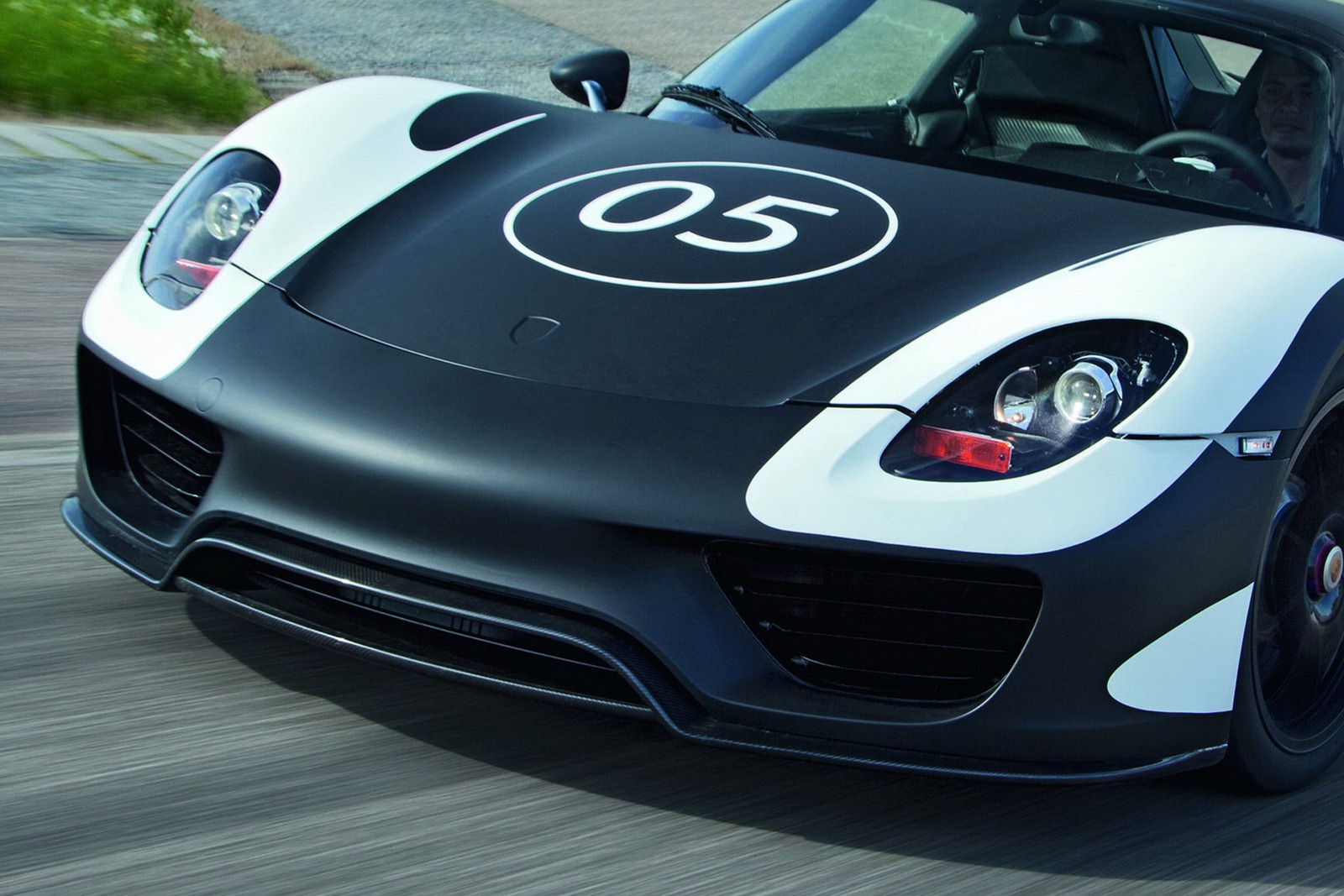
The wait for Porsche's most radical sports car ever, the 918 Spyder, is nearing its end with the Stuttgart based automaker having completed the development of the pre-production prototypes, the first photos of which were released today. First seen as a concept at the 2010 Geneva Motor Show, the 918 Spyder is a plug-in hybrid supercar that will enter production at the end of September 2013. Porsche said that the first customer deliveries will take place "before 2013 is out". Previously, the Germans had announced that prices in the U.S., excluding destination and handling, will start at $845,000 (equal to €655,000), and in Europe from €645,000 (equal to $835,400) before VAT and country-specific charges.  The new 918 Spyder features a driveline that combines a mid-mounted V8 gasoline engine with a displacement of more than 4.0-liters and an output that exceeds 500-horses driving the rear wheels through a 7-speed dual clutch transmission, with two electric motors, one on each axle, with a joint output of at least 218-horses. Porsche pointed out that while the system's combined output will surpass the 770hp mark, the 918 Spyder will return a fuel consumption of just 3.0lt/100km (78.4mpg US or 94.2mpg UK), evidently with the use of the electric motors, which are believed to be able to power the car alone for at least 25 km (16 miles). The company previously quoted a 0 to 100 km/h (62 mph) sprint time of 3.2 seconds and a top speed of more than 320 km/h (199 mph), though these numbers are not final. The flagship Porsche model is built around a carbon fibre-reinforced plastic monocoque and features fully adaptive aerodynamics and an adaptive rear-axle steering. The styling of the pre-production 918 Spyder remains close to the original concept with changes including the new headlamp fixtures, different wheels, the addition of full size exterior mirrors, the subtly redesigned rear end and the relocation of the exhaust pipes from the sides to the top part of the engine compartment. Porsche has also designed a manual roof system with removable panels that can be stowed away in the front luggage compartment
PHOTO GALLERY


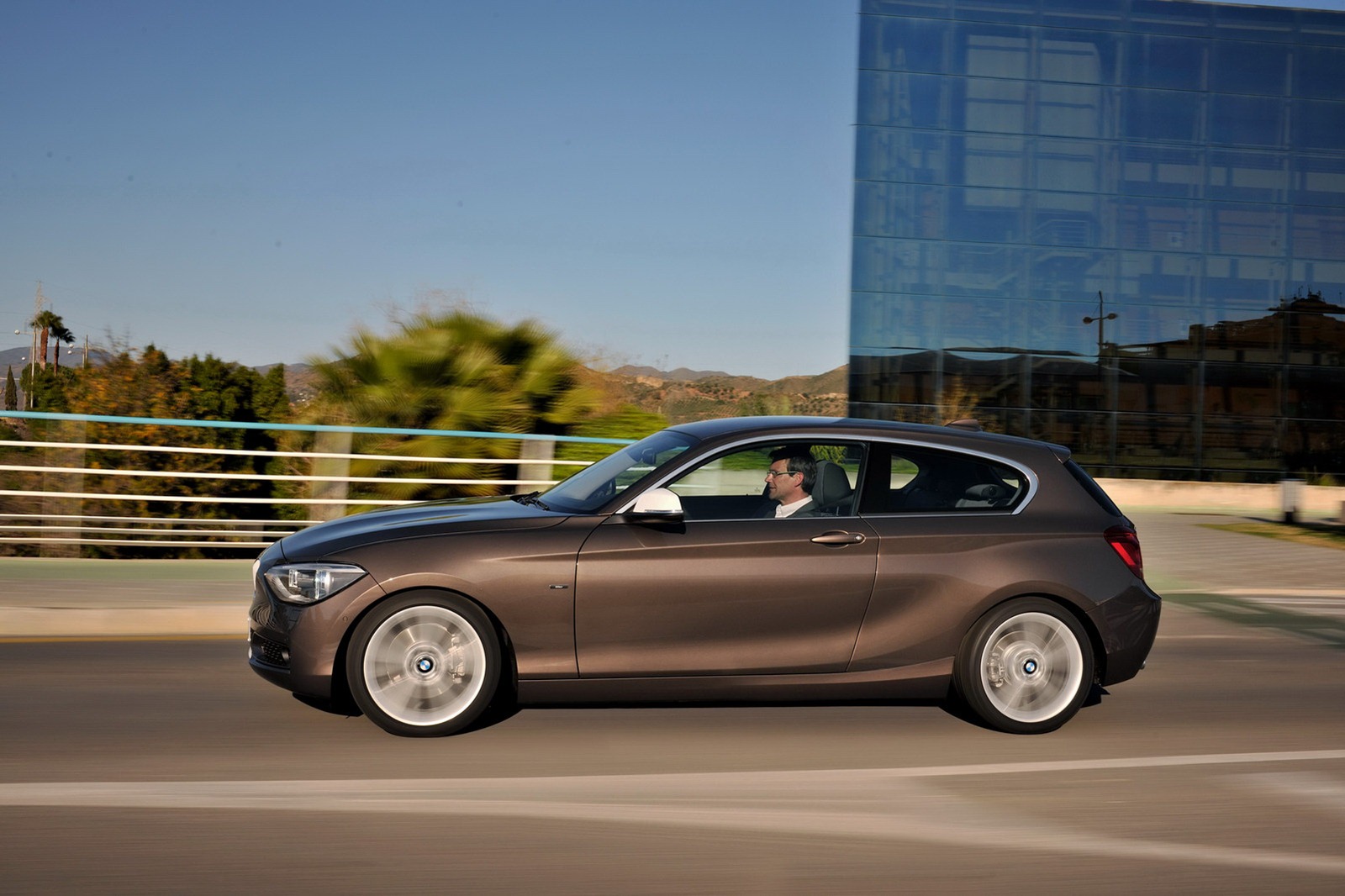
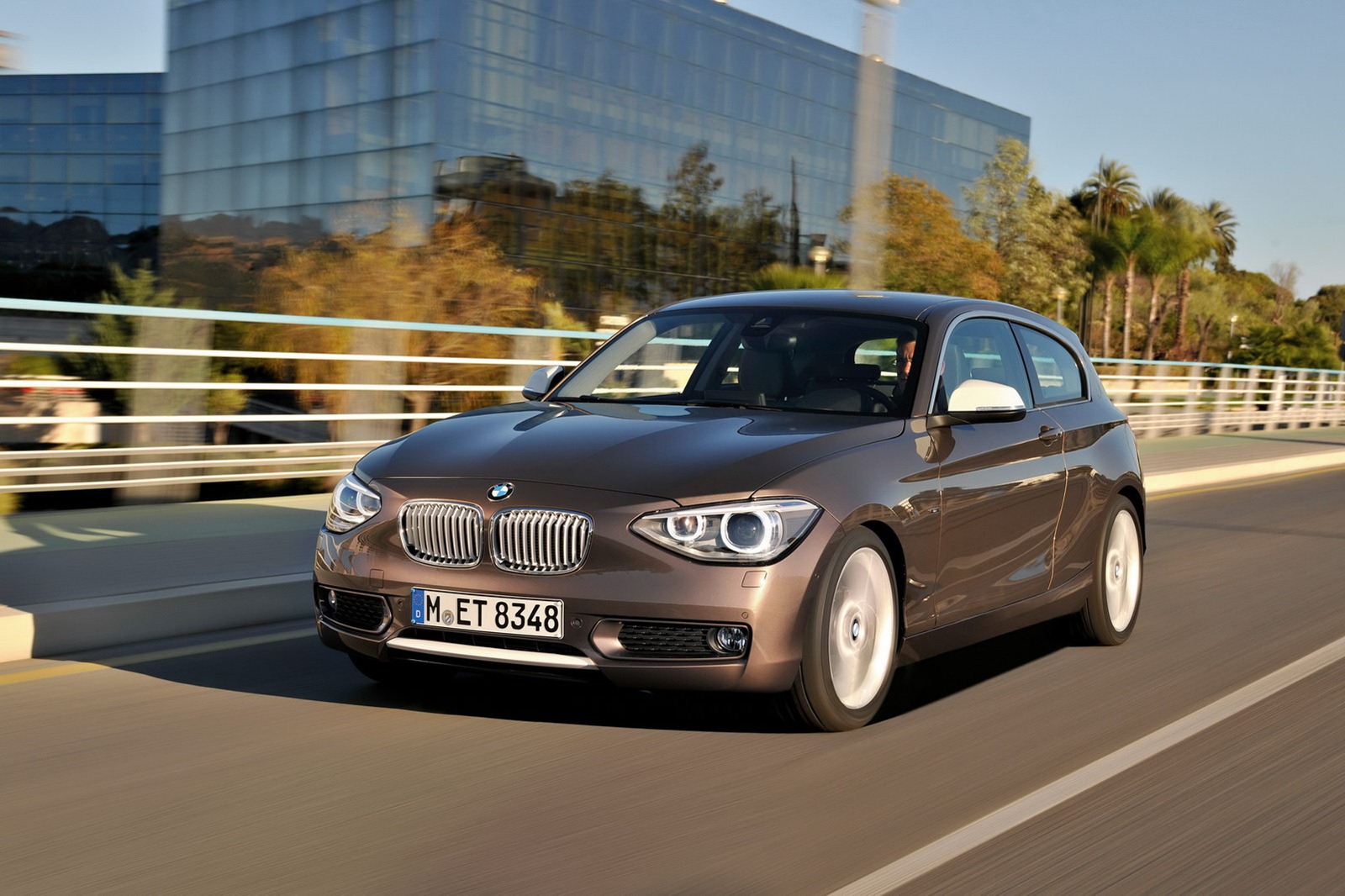
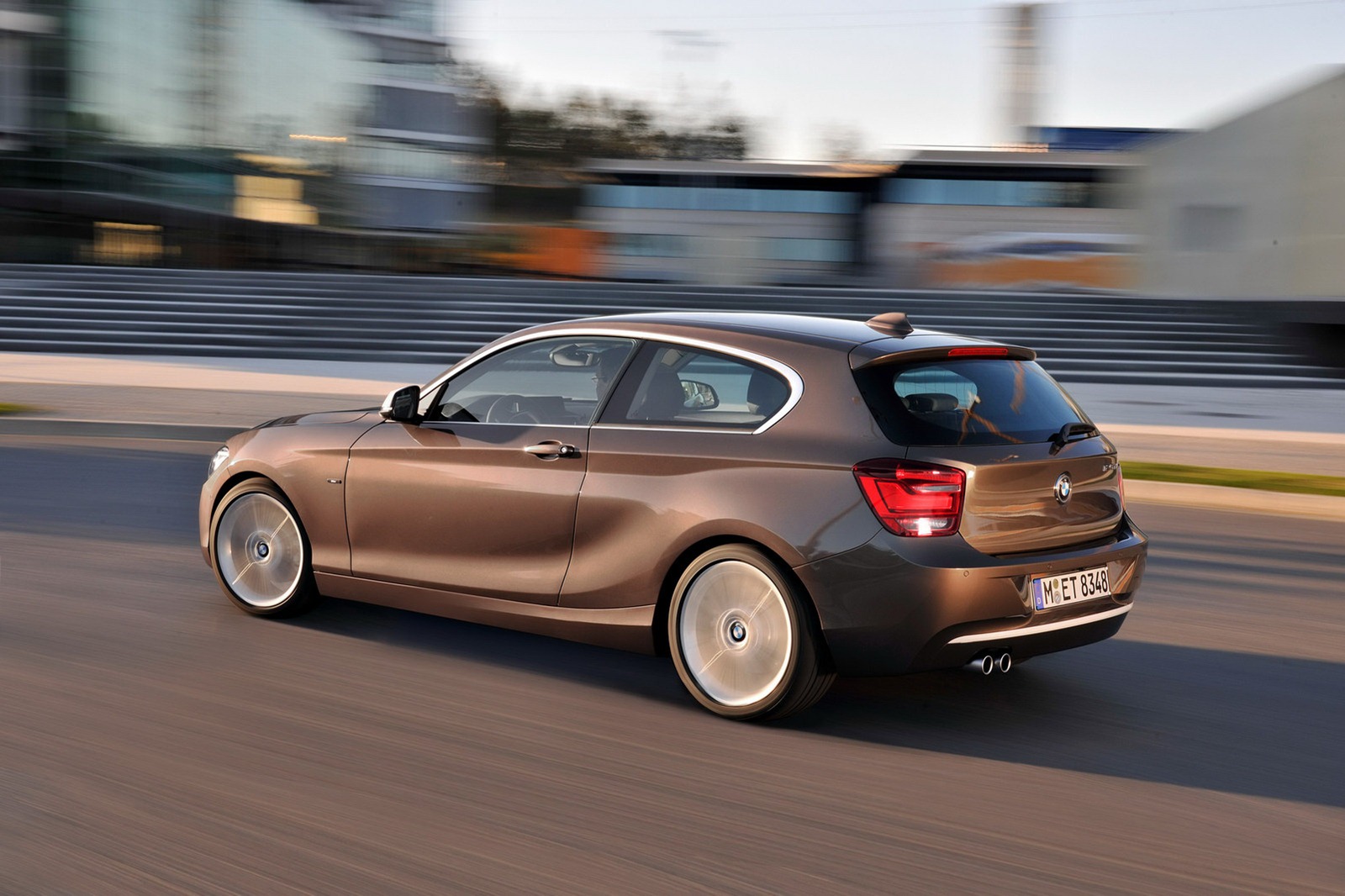
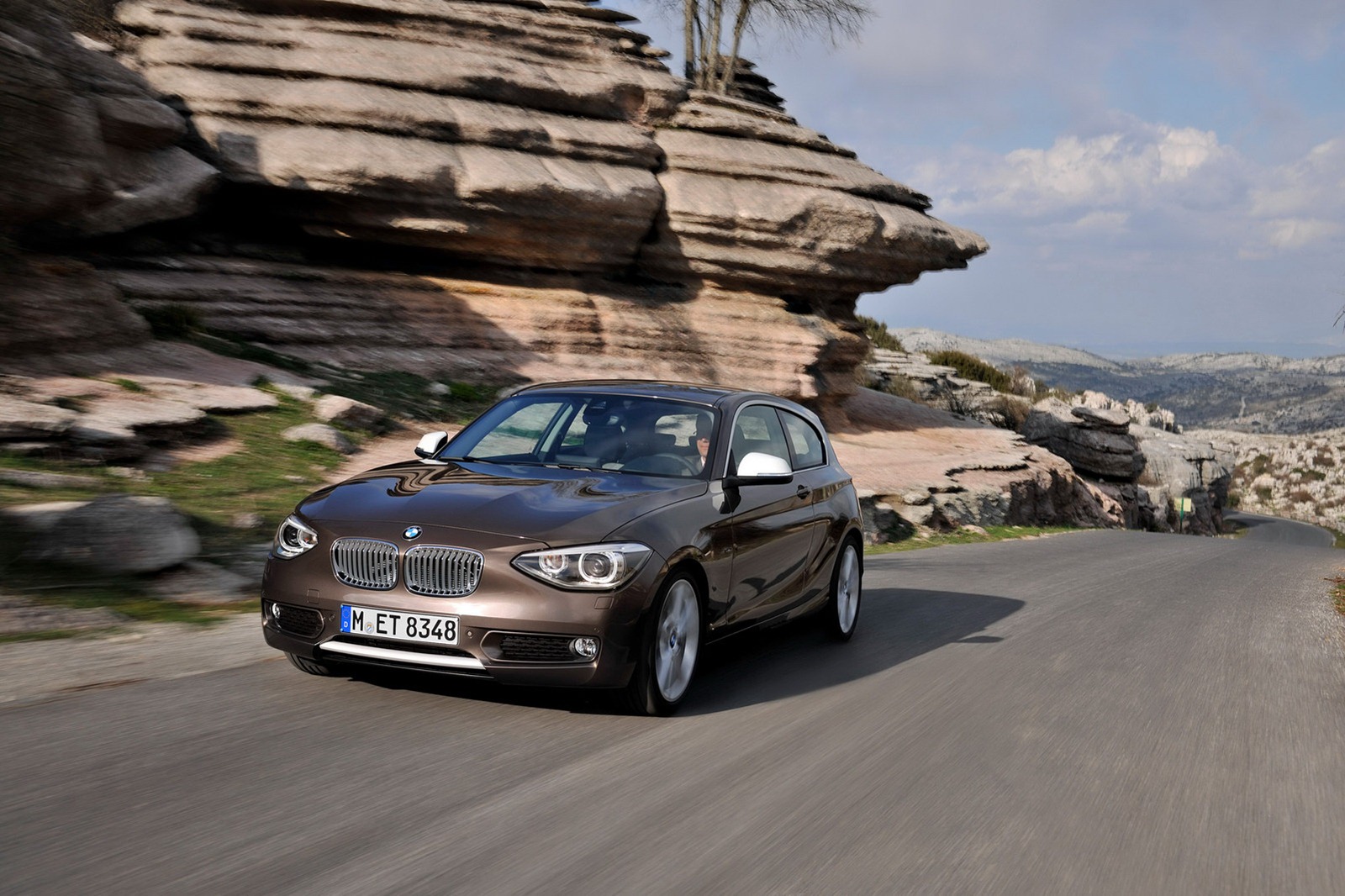
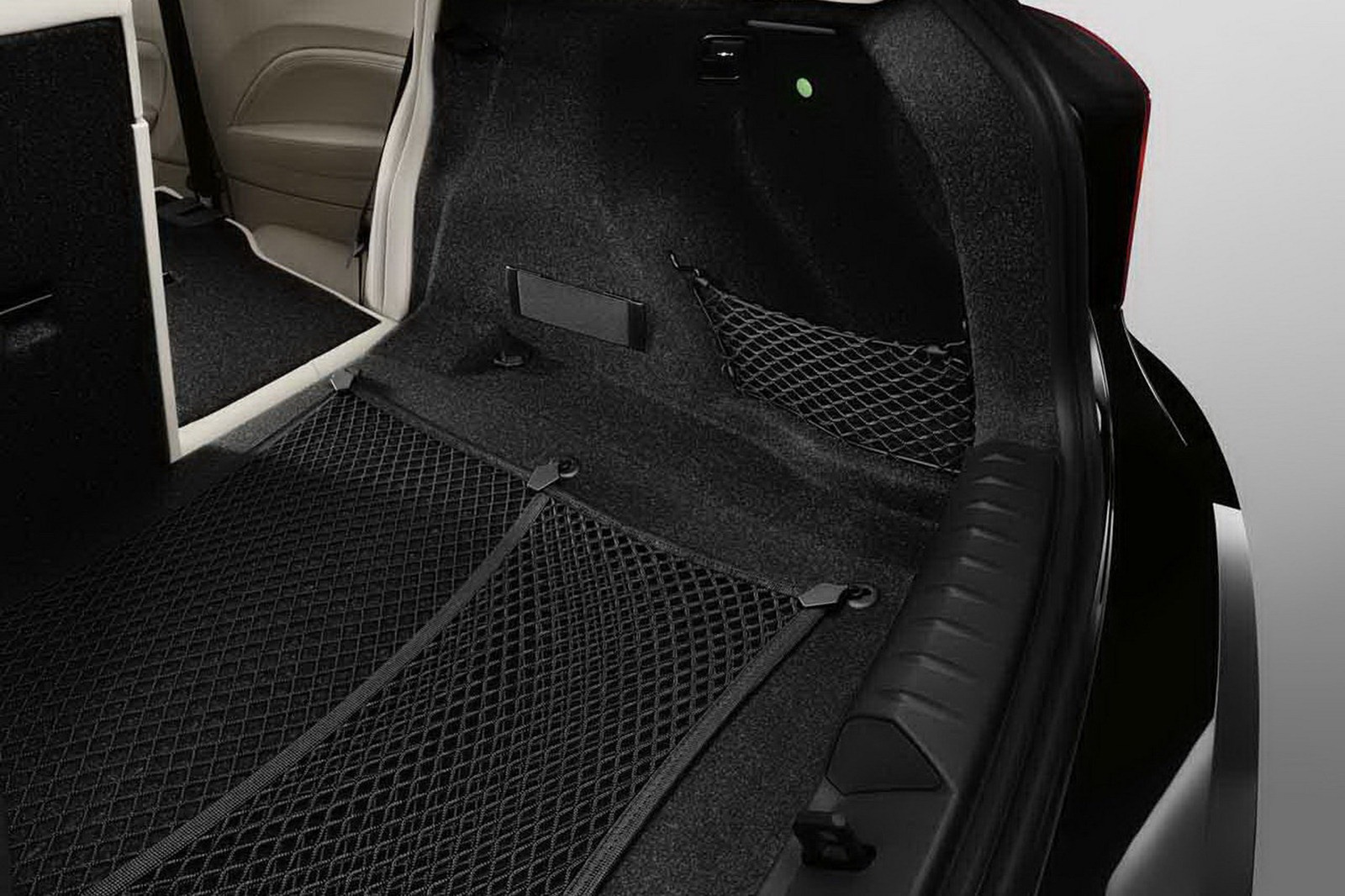
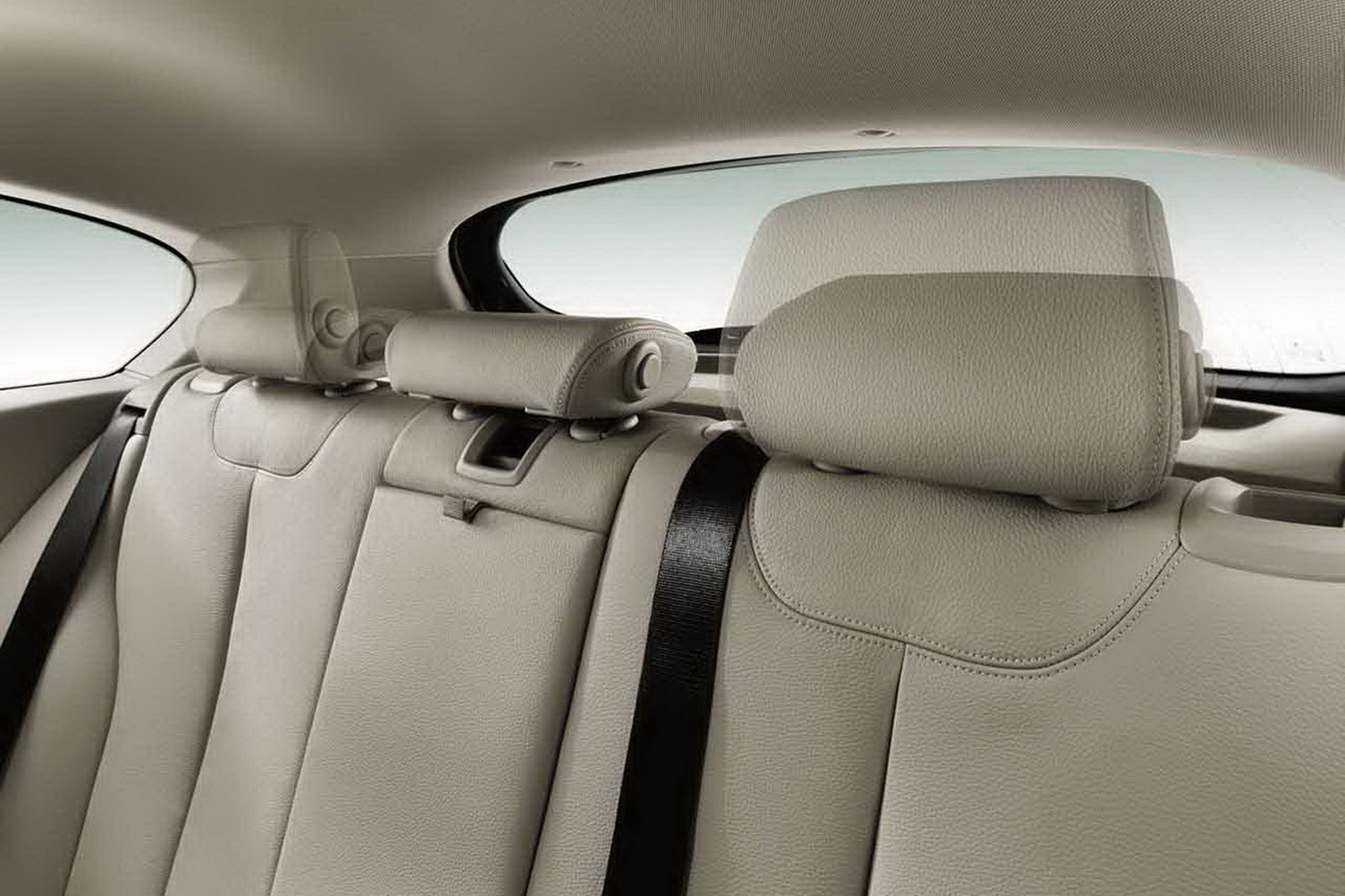
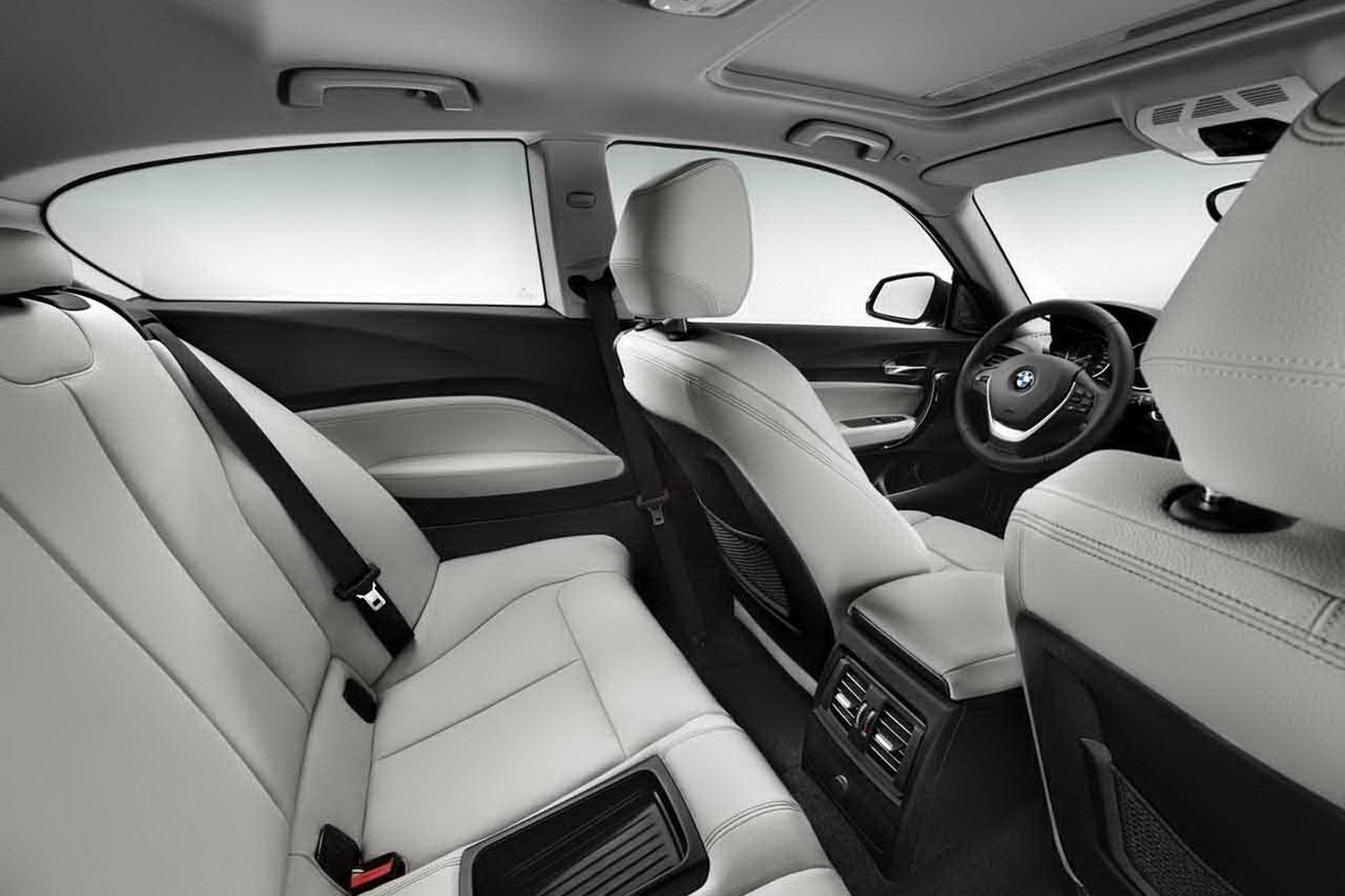
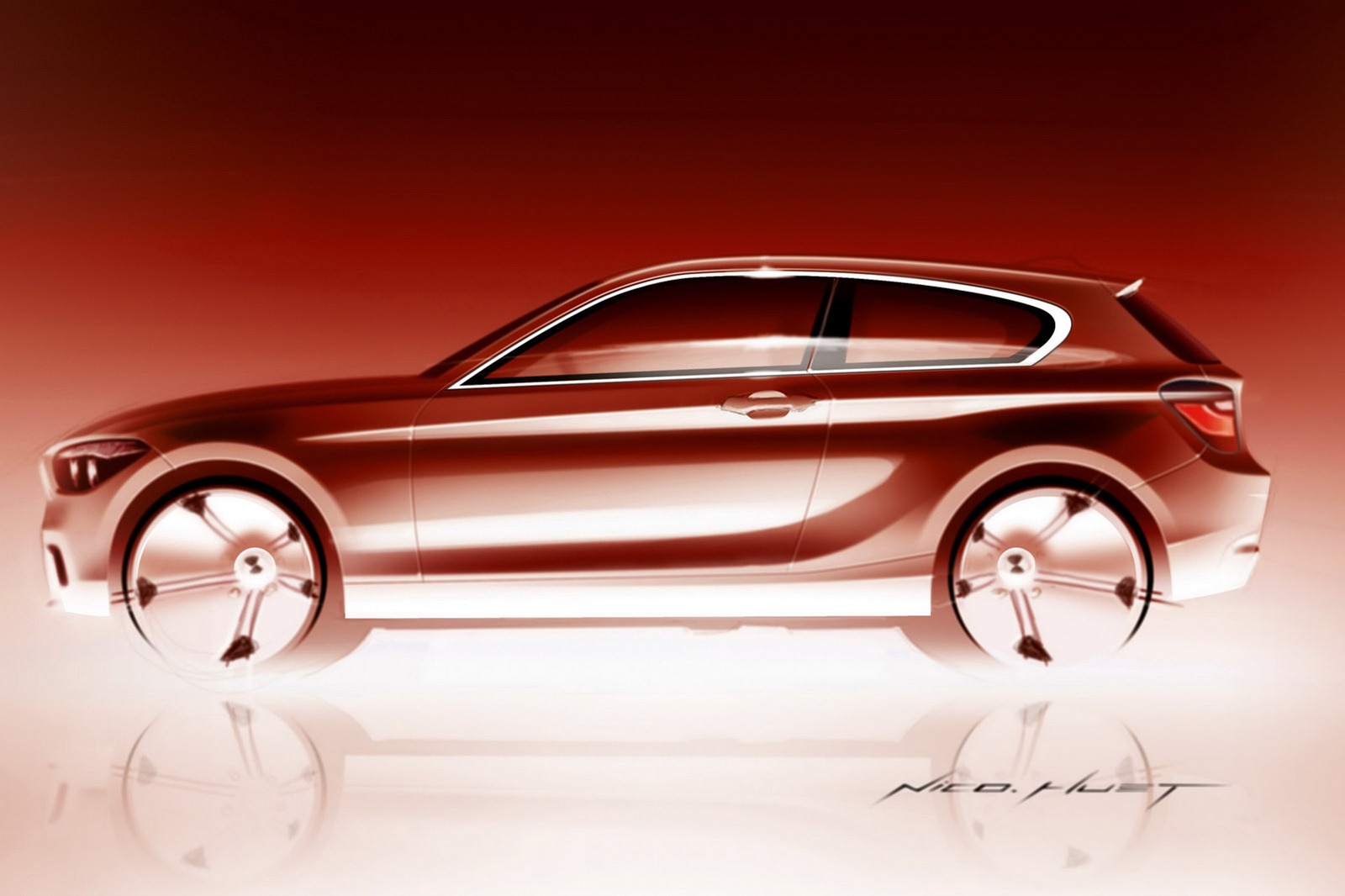
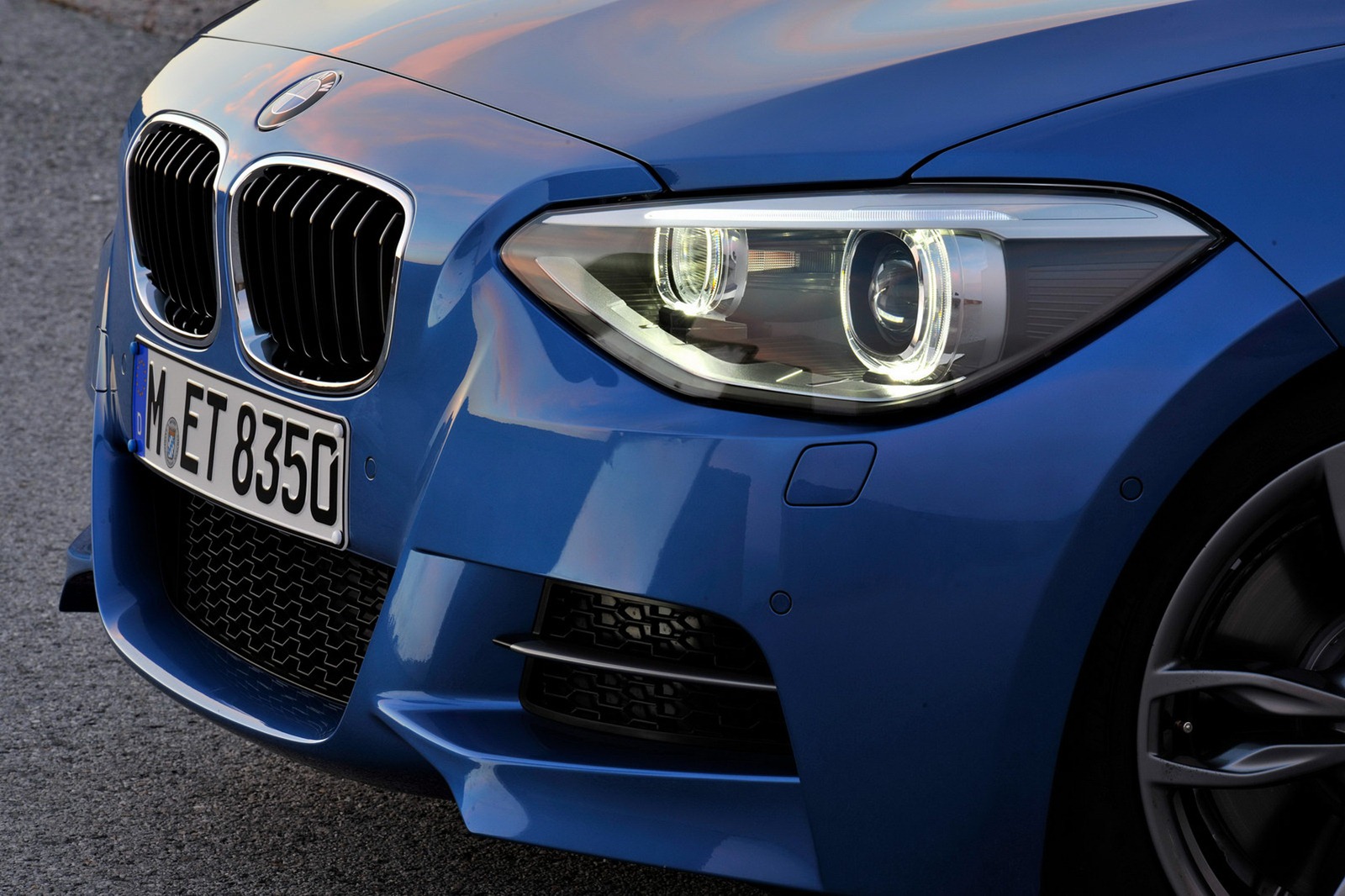
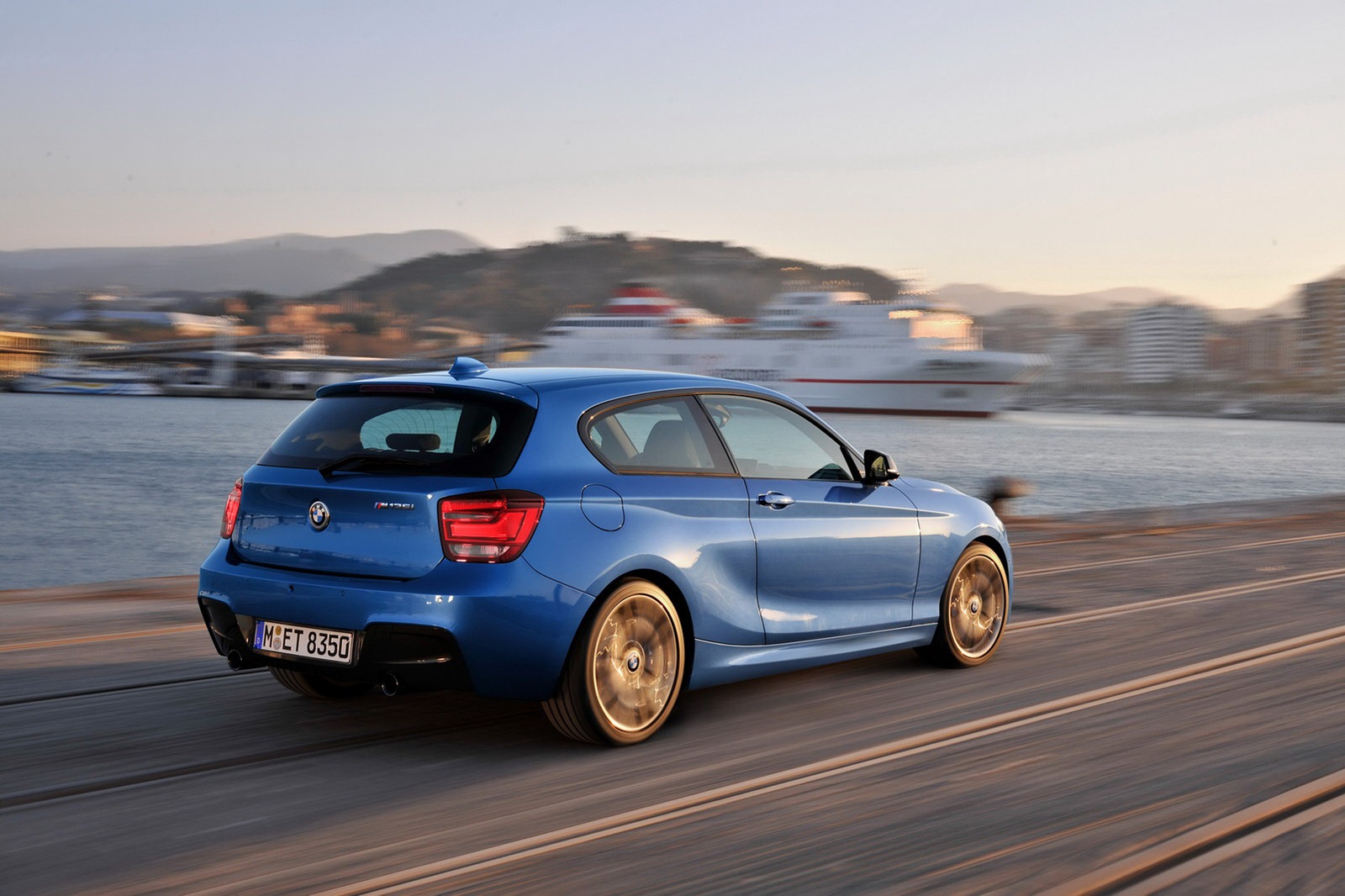
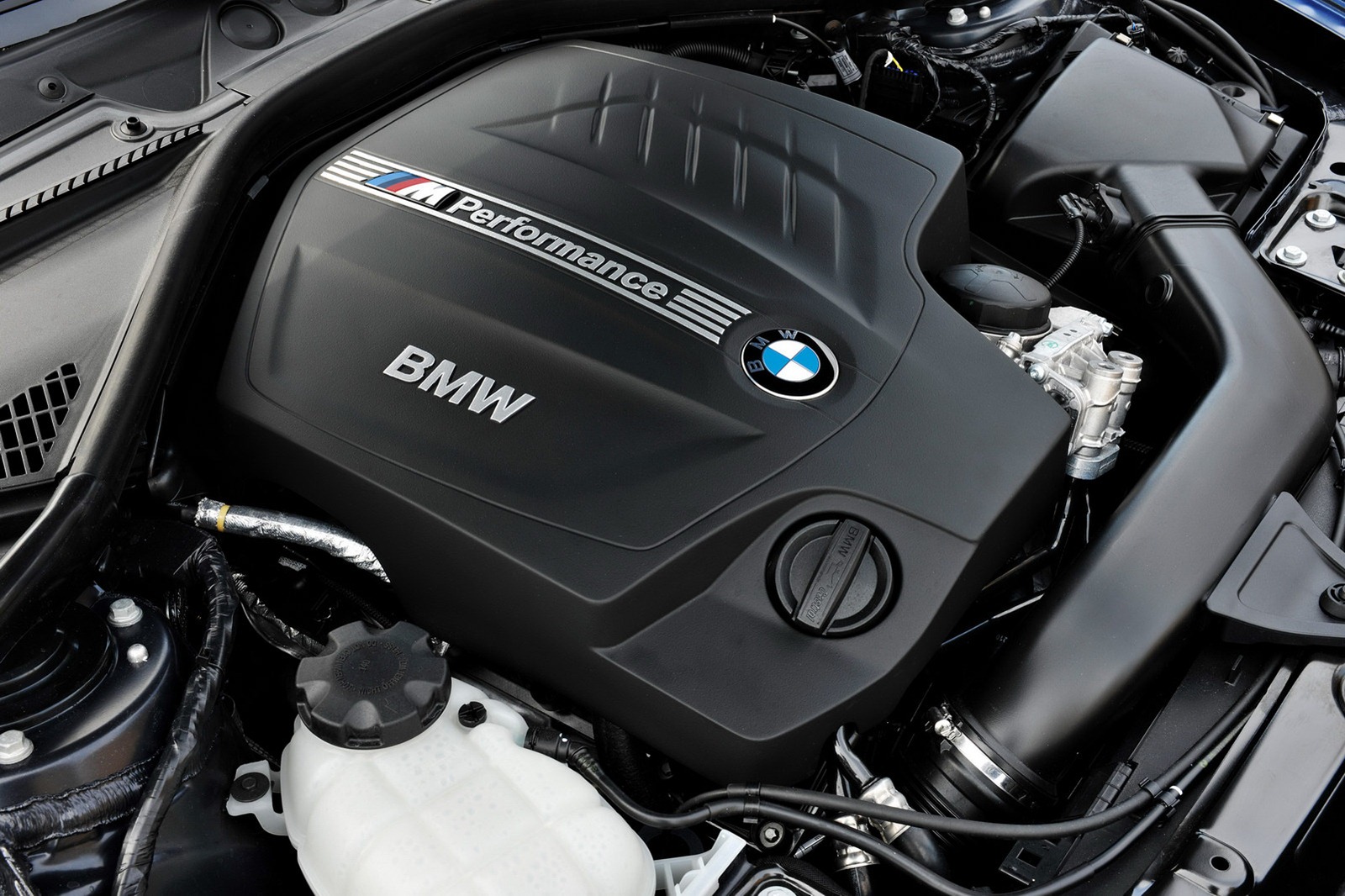
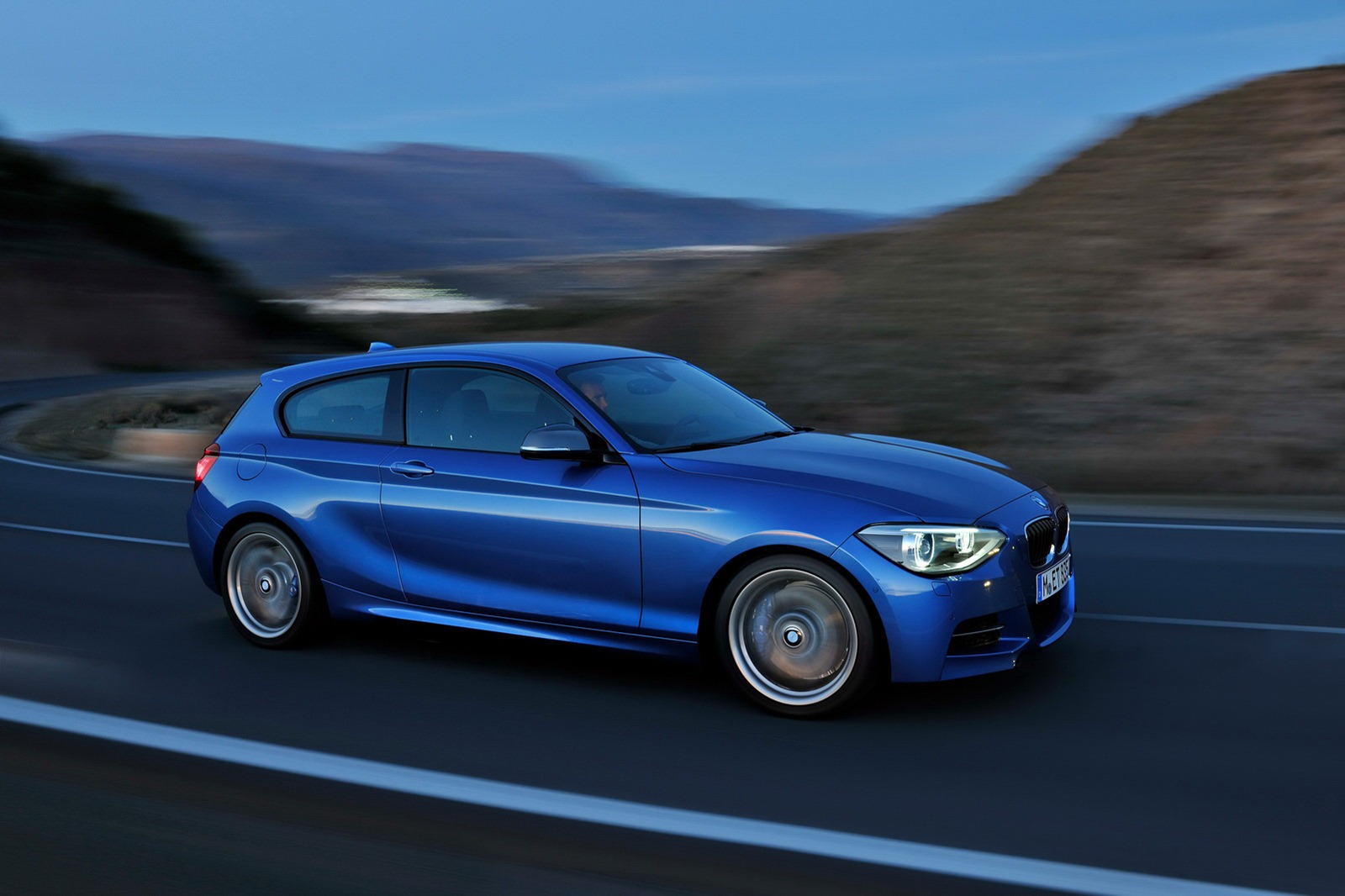
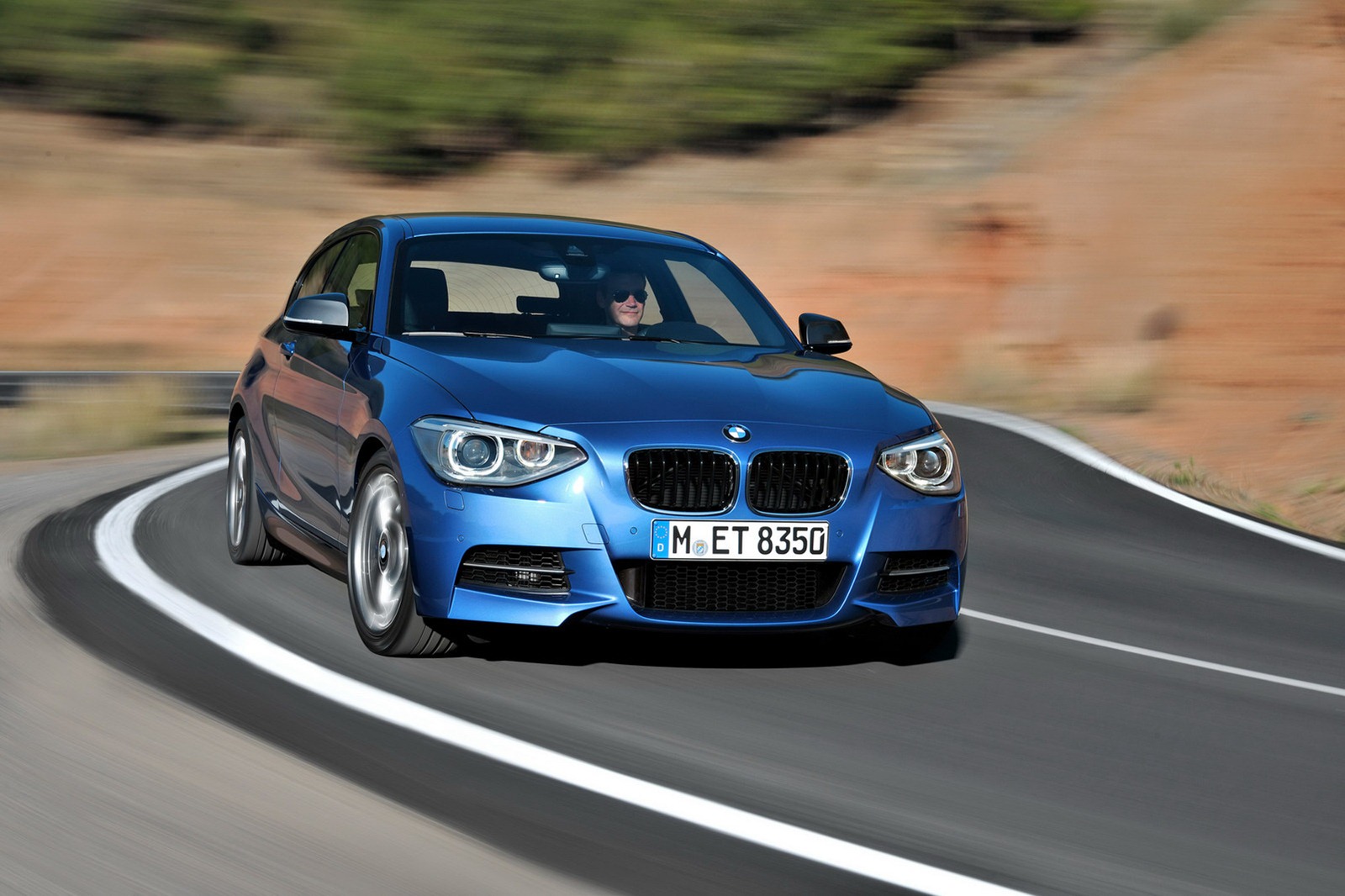
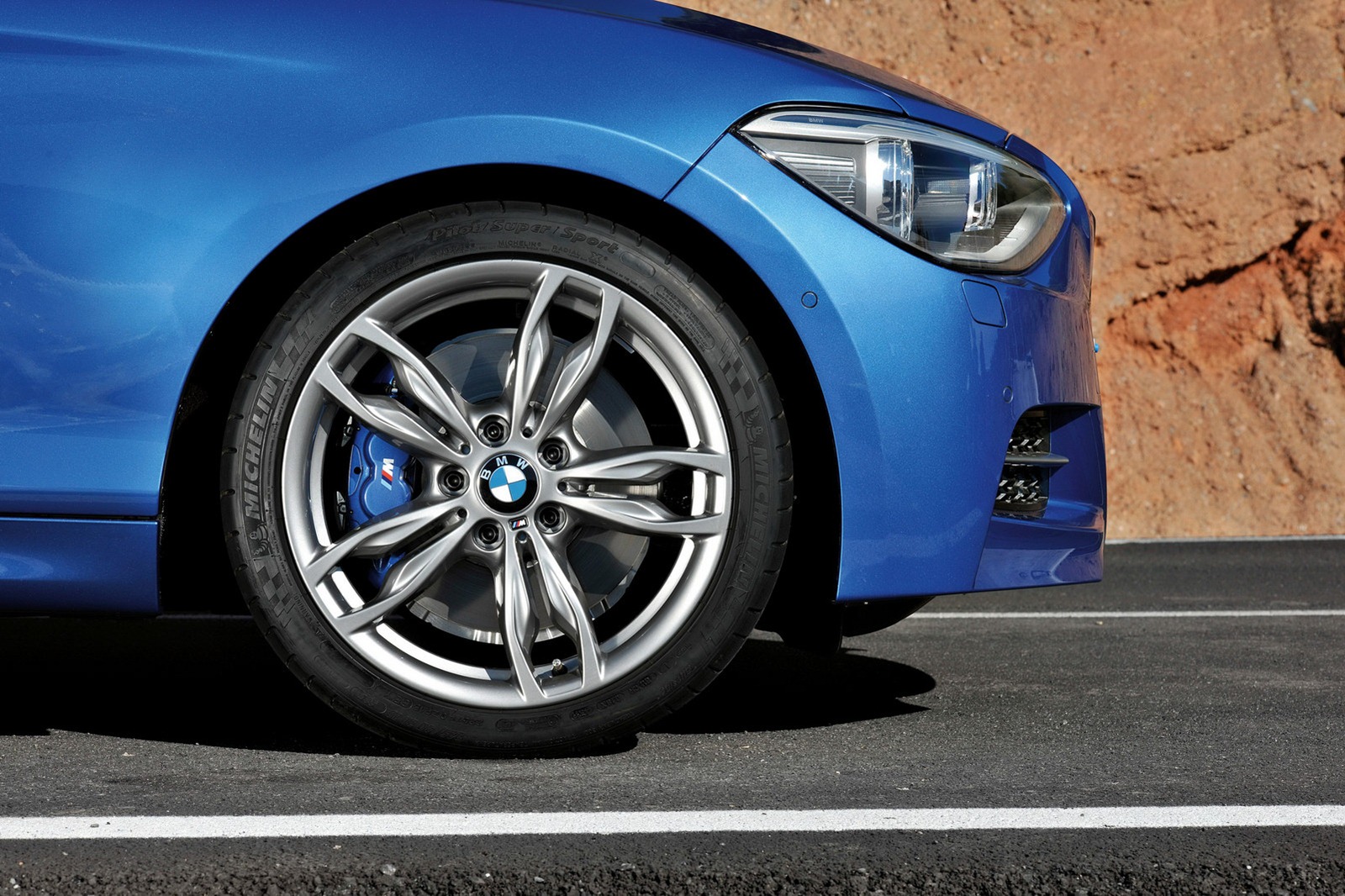
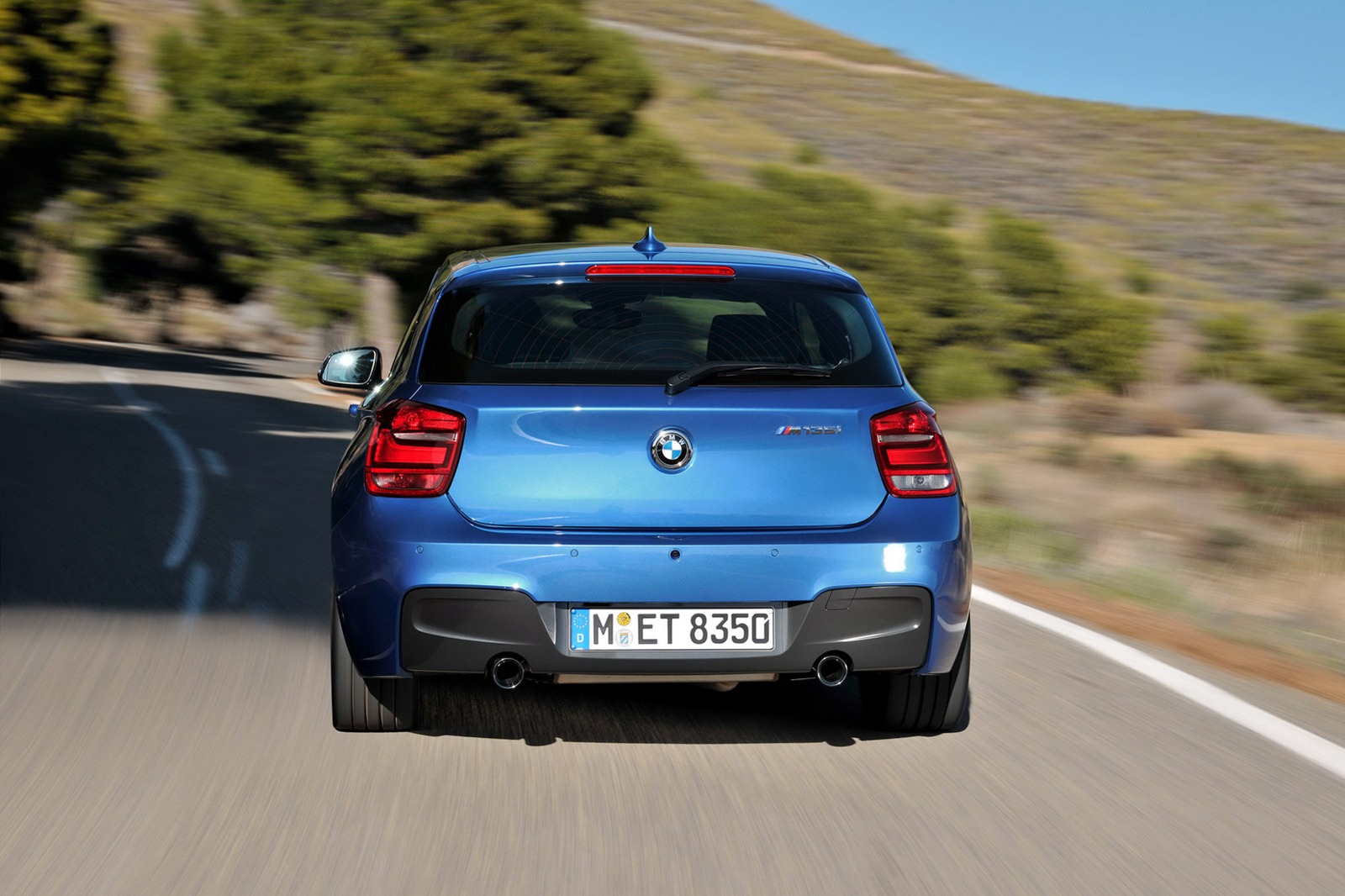
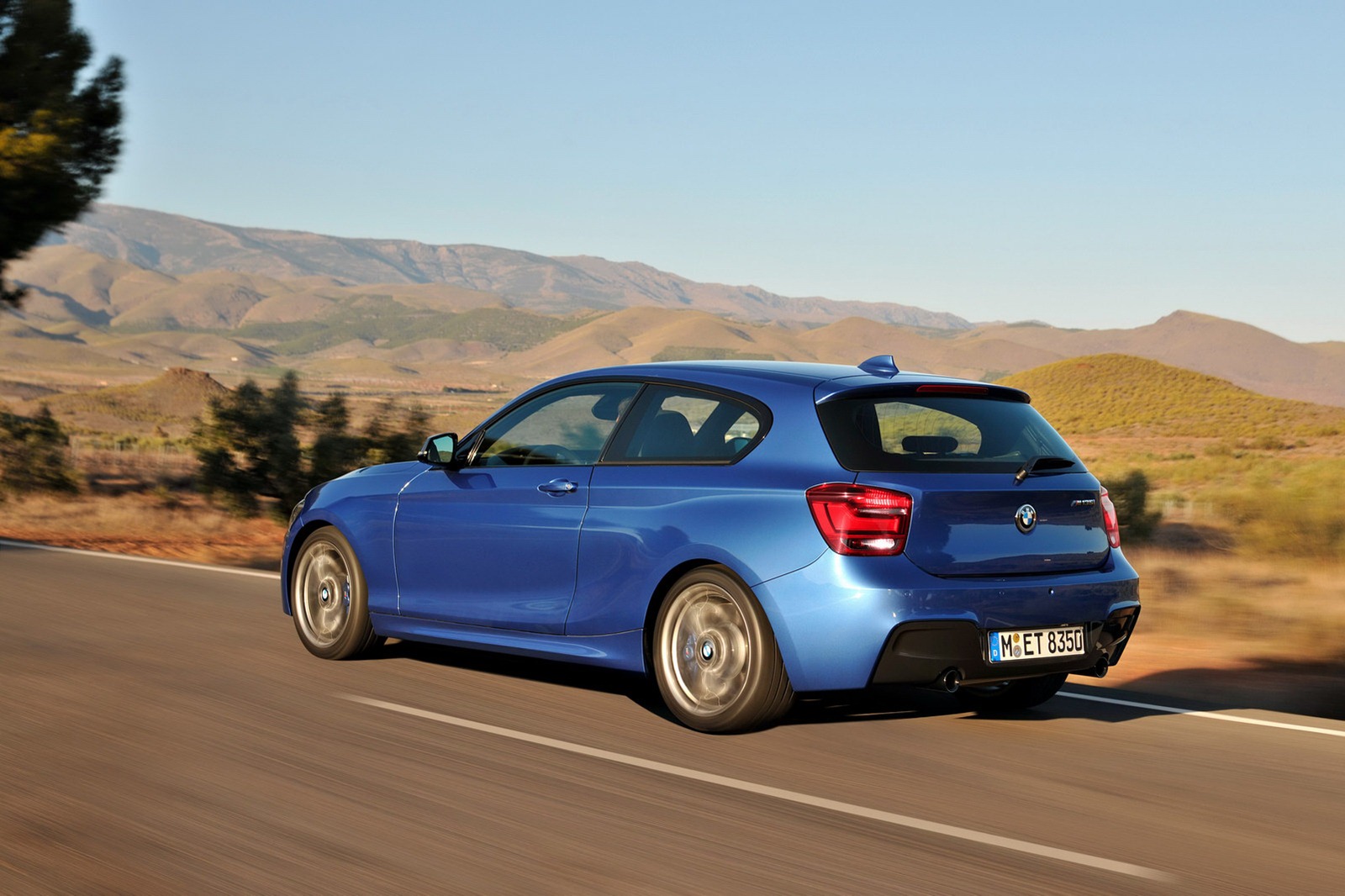
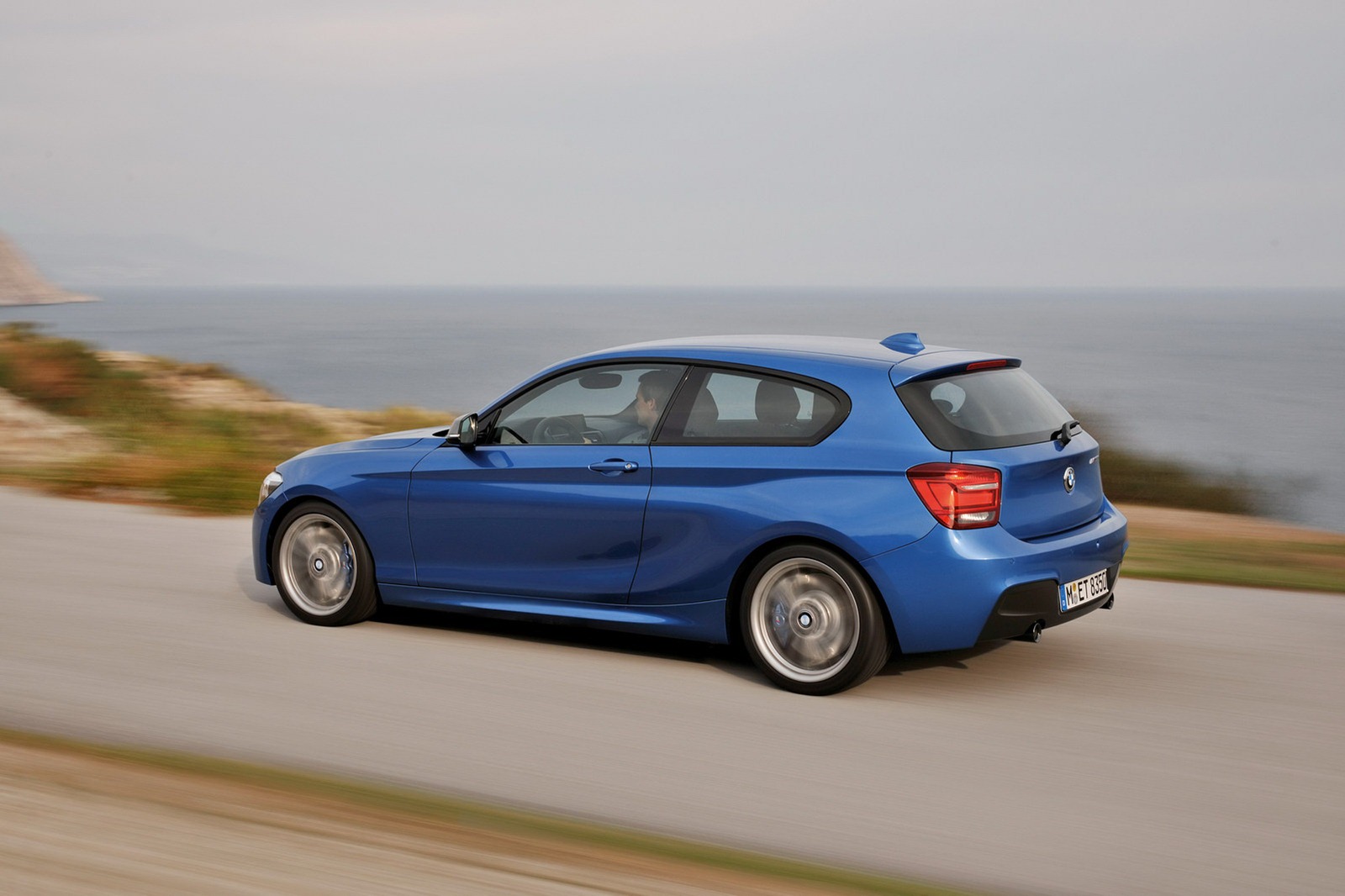
Almost a year after the introduction of the second generation of the 1-Series five-door hatchback, BMW has presented a second body variant to the range in the form of the three-door hatchback plus a new flagship model, the M135i, which we first saw in pre-production trim at the Geneva Motor Show in March. The new three-door model inherits the styling of the five-door 1-Series with the only change worth mentioning being the wider doors with frameless windows. The car's exterior dimensions are the same as the 5d model's at 4,324 mm (170.2-in.) long, 1,765 mm (69.5-in) wide, and 1,421 mm (55.9-in.) tall with a wheelbase of 2,690 mm (105.9-in).  BMW says that compared to the previous 1-Series 3d, the new car offers more rear legroom (+21mm) and a 30 liter larger luggage compartment with a total volume of 360lt. The three-door hatchback model's engine range mirrors that of its more practical sibling with the addition of two brand new petrol units, one at each end of the spectrum for the 114i and M135i. The petrol lineup includes the new 114i with a 101hp (102PS) 1.6-liter turbo four-cylinder, the 116i with a 134hp (136PS) 1.6-liter turbo'd inline-four, the 125i with a 215hp (218PS) 2.0-liter turbocharged four and the new M135i that features a 3.0-liter turbocharged straight-six producing 315hp (320PS) at 5,800rpm and 450Nm (332 lb-ft) from 1,300 to 4,500rpm. BMW quotes a zero to 100km/h (62mph) sprint time of 5.1 seconds for the 6-speed manual gearbox version of the M135i and 4.9 seconds for the optional 8-speed automatic model with gearshift paddles integrated in the steering wheel. Both versions top out at 250 km/h (155mph). The M135i also features an M Performance-prepped chassis with sports suspension, steering and brake systems along with an M styling package that bundles together a new front bumper, a rear bumper with a diffuser, 18-inch alloy wheels, silver mirror caps, sport seats and bespoke interior trim. On the diesel front, the three-door model offers buyers four options including the 125d with 215hp (218PS), the 118d with 141hp (143PS) and the 116d with 114hp (116PS), all of which are propelled by a 2.0-liter turbocharged inline-four diesel engine. The most fuel efficient model of the range is the 116d EfficientDynamics Edition featuring a 1.6-liter turbocharged four-cylinder diesel rated at 114hp (116PS) at 4,000rpm and 260Nm between 1,750-2,500rpm, linked to a six-speed manual gearbox driving the rear wheels. It comes equipped with a start / stop system, electric power steering, automatic air flap control, optimized rear differential and suspension, and tires with reduced rolling resistance. The three-door 116d EfficientDynamics accelerates from 0 to 100 km/h (62mph) in 10.5 seconds and reaches a top speed of 195 km/h (122mph). Average fuel consumption is 3.8lt/100km (61.9mpg US) with a CO2 rating of 99g/km. Aside from the 116d EfficientDynamics, all other models can be fitted with an optional 8-speed automatic transmission. Furthermore, BMW's Auto Start/Stop function is available for both manual and automatic transmissions throughout the range. In November, BMW will enhance the range with the 120d powered by a 181hp (184PS) diesel and the 118i featuring a 168hp (170PS) gasoline engine. BMW said it will also offer xDrive four-wheel drive technology in the future starting with the 120d xDrive and the M135i xDrive.
BMW 1-Series Three-Door Model variants:
M135i: Straight six-cylinder petrol engine with M Performance
TwinPower Turbo technology comprising Twin Scroll turbocharger, direct
fuel injection system High Precision Injection, variable valve control
VALVETRONIC and Double VANOS,
Displacement: 2 979 cc, power output: 235 kW/320 hp at 5 800 rpm,
Max. torque: 450 Nm at 1 300 – 4 500 rpm,
Acceleration [0 – 100 km/h]: 5.1 seconds (automatic: 4.9 seconds)
Top speed: 250 km/h,
Average fuel consumption: 8 litres (7.5 litres)/100 km,
CO2 emissions: 188 g/km (175 g/km), emissions standard: EU5.
125i: Straight four-cylinder petrol engine with BMW TwinPower Turbo technology comprising Twin Scroll turbocharger, direct fuel injection system High Precision Injection, variable valve controlVALVETRONIC and Double VANOS,
Displacement: 1 995 cc, power output: 160 kW/218 hp at 5 000 rpm,
Max. torque: 310 Nm at 1 350 – 4 800 rpm,
Acceleration [0 – 100 km/h]: 6.4 seconds (automatic: 6.2 seconds),
Top speed: 245 km/h (243 km/h),
Average fuel consumption: 6.6 litres (6.4 litres)/100 km,
CO2 emissions: 154 g/km (149 g/km), emissions standard: EU5.
116i: Straight four-cylinder petrol engine with BMW TwinPower Turbo technology comprising Twin Scroll turbocharger, direct fuel injection system High Precision Injection, variable valve control VALVETRONIC and Double VANOS,
Displacement: 1 598 cc, power output: 100 kW/136 hp at 4 350 rpm,
Max. torque: 220 Nm at 1 350 rpm,
Acceleration [0 – 100 km/h]: 8.5 seconds (automatic: 8.7 seconds),
Top speed: 210 km/h,
Average fuel consumption*: 5.5 – 5.7 litres (5.6 – 5.8 litres)/100 km,
CO2 emissions*: 129 – 132 g/km (131 – 134 g/km), emissions standard: EU5.
114i: Straight four-cylinder petrol engine withBMW TwinPower Turbo technology comprising Twin Scroll turbocharger, direct fuel injection system High Precision Injection, variable valve control VALVETRONIC and Double VANOS,
Displacement: 1 598 cm3, power output: 75 kW/102 hp at 4 000 rpm,
Max. torque: 180 Nm at 1 100 rpm,
Acceleration [0 – 100 km/h]:11.2 seconds,
Top speed: 195 km/h
Average fuel consumption*: 5.5 – 5.7 litres/100 km
CO2 emissions*: 129 – 132 g/km, emissions standard: EU5.
125d: Straight four-cylinder diesel engine with BMW TwinPower Turbo technology comprising multi-stage turbocharging with variable intake geometry for the high-pressure charger, Common Rail Direct Injection with piezo injectors (max. injection pressure: 1 800 bar),
Displacement: 1 995 cm3, power output: 160 kW/218 hp at 4 000 rpm,
Max. torque: 450 Nm between 1 500 and 2 500 rpm,
Acceleration [0 – 100 km/h]: 6.5 seconds (automatic: 6.3 seconds)
Top speed: 240 km/h
Average fuel consumption: 4.9 litres (4.8 litres)/100 km
CO2 emissions: 129 g/km (126 g/km), emissions standard: EU5.
118d: Straight four-cylinder diesel engine with BMW TwinPower Turbo technology comprising turbocharger with variable intake geometry, Common Rail Direct injection with solenoid valve injectors (max. injection pressure: 1 600 bar),
Displacement: 1 995 cm3, power output 105 kW/143 hp at 4 000 rpm
Max. torque 320 Nm between 1 750 and 2 500 rpm
Acceleration [0 – 100 km/h]: 8.9 seconds (automatic: 8.6 seconds)
Top speed: 212 km/h
Average fuel consumption*: 4.4 – 4.5 litres (4.4 – 4.5 litres)/100 km,
CO2 emissions*: 115 – 118 g/km (116 – 119 g/km), emissions standard:
EU5.
116d: Straight four-cylinder diesel engine with BMW TwinPower Turbo technology comprising turbocharger with variable intake geometry, Common Rail Direct injection with solenoid valve injectors (max. injection pressure: 1 600 bar),
Displacement: 1 995 cm3, power output: 85 kW/116 hp at 4 000 rpm,
Max. torque: 260 Nm between 1 750 and 2 500 rpm
Acceleration [0 – 100 km/h]: 10.3 seconds
Top speed: 200 km/h
Average fuel consumption*: 4.3 – 4.5 litres (automatic:
4.4 – 4.5 litres)/100 km
CO2 emissions*: 114 – 117 g/km (115 – 119 g/km),
emissions standard: EU5.
PHOTO GALLERY